
elitere | Aug. 26, 2026
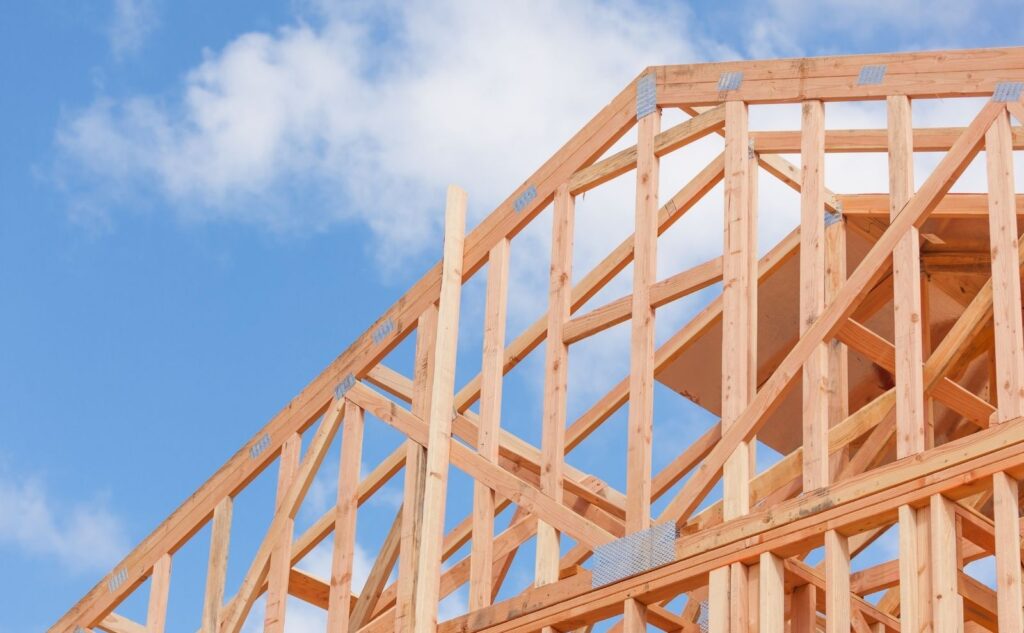
If you are considering building a custom home in Kitchener-Waterloo, one of the first questions is usually: how much does it cost per square foot to build a house?
The quick answer is that a reasonable 2026 planning range for custom-home construction in Kitchener-Waterloo is approximately $300 to $600+ per square foot, depending on the builder, design, site and level of finish.
A current Kitchener-Waterloo-area custom builder places quality custom construction around $300-$375 per square foot, premium construction around $375-$475, and luxury construction around $475-$600+. RE/MAX Canada’s current Ontario guide places many professionally built detached homes around $375-$500 per square foot for construction alone, while noting that the broader Ontario range can extend from approximately $300 to $800 per square foot.
These are planning estimates, not fixed prices.
The most important point is that cost per square foot is not the same thing as the total cost of your project.
Land, development charges, permits, architectural and engineering fees, demolition, site preparation, servicing, financing, HST, landscaping and the level of finish can all materially affect the final number.
There is no official municipal or industry-wide price per square foot for building a custom home. Each builder prices projects differently, and what is included in a quoted square-foot cost can vary significantly.
For preliminary budgeting, current published estimates suggest:
| Type of Custom Home | Approximate Construction Cost |
| Quality Custom | $300-$375+/sq. ft. |
| Premium Custom | $375-$475+/sq. ft. |
| Luxury Custom | $475-$600+/sq. ft. |
| Highly Customized Estate Home | Can exceed $600/sq. ft. |
For anyone planning a build, these numbers should be used as an early feasibility tool – not as a substitute for an actual builder quote.
Using $375-$500 per square foot as a practical preliminary construction range:
| Above-Grade Home Size | Approximate Construction Budget |
| 2,000 sq. ft. | $750,000-$1,000,000 |
| 2,500 sq. ft. | $937,500-$1,250,000 |
| 3,000 sq. ft. | $1,125,000-$1,500,000 |
| 3,500 sq. ft. | $1,312,500-$1,750,000 |
| 4,000 sq. ft. | $1,500,000-$2,000,000 |
At the luxury end, the numbers increase quickly. A 3,500-square-foot home at $600 per square foot represents approximately $2.1 million in construction before land and any project costs outside the builder’s quoted construction price.
Again, these examples are budgeting exercises based on current published construction estimates – not guaranteed building costs.
This is where comparing builders can become confusing.
There is no universal definition of what a builder must include in a price-per-square-foot quote. One builder may include items another treats as separate costs.
Before comparing two prices, ask whether each quote includes:
This is why we would never compare two builders based solely on their advertised cost per square foot. The specifications, allowances and exclusions matter just as much as the headline number.
Development charges are an important part of a new-build budget, and they vary between Kitchener and Waterloo.
For a new single-detached home in either city, there is generally a City development charge as well as a separate Region of Waterloo development charge.
The City of Waterloo’s currently published revised 2026 development charge applicable to a new single-detached home is $25,201.
The Region of Waterloo’s current full-service development charge applicable to a new single-detached dwelling in the city is $43,285.
Published Base Rates:
There is, however, an important 2026 development to be aware of.
On June 15, 2026, Waterloo Council approved, in principle, a 30% reduction in residential City development charges, retroactive to March 30, 2026, through the Ontario-Canada Development Charge Reduction Program. Participation depends on a competitive funding application, and the City has stated that funding approval is not guaranteed.
As of August 19, 2026, Waterloo’s public development-charge schedule continues to show the $25,201 rate.
For that reason, anyone budgeting a Waterloo build should not assume that the 30% reduction applies unless the City confirms it for the specific project.
Kitchener’s development charge depends on where the property is located.
For permits issued after December 1, 2025, the City’s published rate applicable to a new single-detached home is:
Kitchener City Development Charge:
Adding the current Regional full-service charge of $43,285 gives published base-rate totals of approximately:
City + Region Published Base-Rate Totals:
Kitchener notes that development-charge rates are subject to change and that the applicable rate is generally determined based on the rules in effect when the building permit is issued.
These figures should therefore be used for planning purposes. Before purchasing a lot or finalizing a construction budget, obtain a project-specific calculation from the municipality.
Potentially.
This is one reason a teardown property and a vacant lot should not automatically be treated the same way financially.
The Region of Waterloo provides redevelopment allowances where qualifying new development replaces existing development. Depending on the circumstances, those allowances can reduce Regional development charges.
Municipal redevelopment credits may also apply under the applicable City development-charge bylaws.
If you are considering buying an older home specifically to demolish and rebuild, have the potential credits confirmed before calculating the economics of the project.
As of August 19, 2026, neither local school board is currently collecting Education Development Charges on new development.
The Waterloo Region District School Board stopped collecting EDCs effective June 1, 2026 because it does not currently meet the provincial eligibility requirements for a new bylaw.
The Waterloo Catholic District School Board also states that, as of June 1, 2026, it is not collecting EDCs until notice is given of a new EDC bylaw.
This could change, so it should be reconfirmed when a building permit is actually being obtained.
The City of Waterloo’s current published permit fee for a new single-detached home is $1.41 per square foot.
Waterloo states that the initial review timeline for a complete new-home permit application is 10 business days once all required documents have been submitted and applicable fees have been paid.
That does not mean every permit will be issued within 10 business days. Revisions, missing information or additional approvals can extend the process.
Kitchener’s current published permit fee for a new detached home is $1.07 per square foot, plus a $500 rebate fee that is automatically refunded when the final building inspection is approved.
Kitchener also notes that additional charges, including a damage deposit and stormwater-management fee, may apply.
Its initial review period for a complete residential permit application is also 10 business days.
This is one of the most important parts of the entire process.
A $500,000 lot can ultimately be a better purchase than a $400,000 lot if the less expensive property requires significant servicing, grading, retaining walls, demolition or other site work.
Before buying land for a custom home, investigate:
The Grand River Conservation Authority regulates certain river and stream valleys, floodplains, slopes, wetlands and other regulated areas. If proposed construction falls within a GRCA-regulated area, a GRCA permit may be required in addition to municipal approvals.
For rural and estate properties in areas such as Woolwich, Wilmot and Wellesley, servicing can also be very different from a city lot. Rural properties may rely on private wells and septic systems, both of which introduce additional site-planning and cost considerations.
This is why buildability should be investigated before purchasing the property.
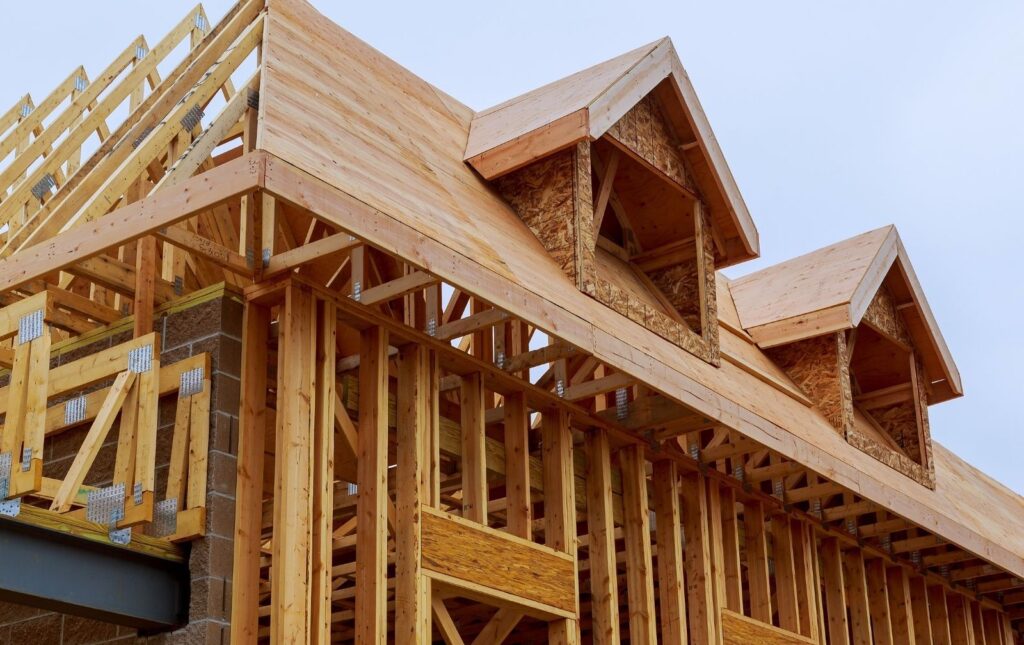
There isn’t one right answer.
A vacant serviced lot may be simpler because there is no existing house to demolish.
A teardown can sometimes offer advantages such as an established location, existing road access and services, and potential redevelopment credits.
But a teardown can also introduce additional costs for demolition, utility disconnections, hazardous-material remediation, tree removal, grading and site preparation.
The right comparison is not: Which property is cheaper to buy?
It is: What is my total cost to get from the property I am buying to the finished home I want?
That is the number that matters.
Generally, yes, on a cost-per-square-foot basis.
A bungalow requires a larger foundation and roof to produce the same amount of above-grade living space.
For example, a 3,000-square-foot bungalow may require close to a 3,000-square-foot footprint, while a 3,000-square-foot two-storey home might provide approximately 1,500 square feet on each level.
Because foundations and roofing are major construction components, building upward can often be more cost-efficient than building outward.
That does not necessarily mean a two-storey is the better investment. Bungalows can command a premium because of their accessibility, functionality and appeal to buyers looking for main-floor living.
Square footage is only one part of the equation.
Two 3,000-square-foot homes can have dramatically different construction costs.
Some of the biggest cost drivers include:
When comparing builder quotes, confirm whether garages, basements and covered outdoor areas are included in the square footage used to calculate the price.
For higher-end custom homes, the project often extends well beyond the house itself.
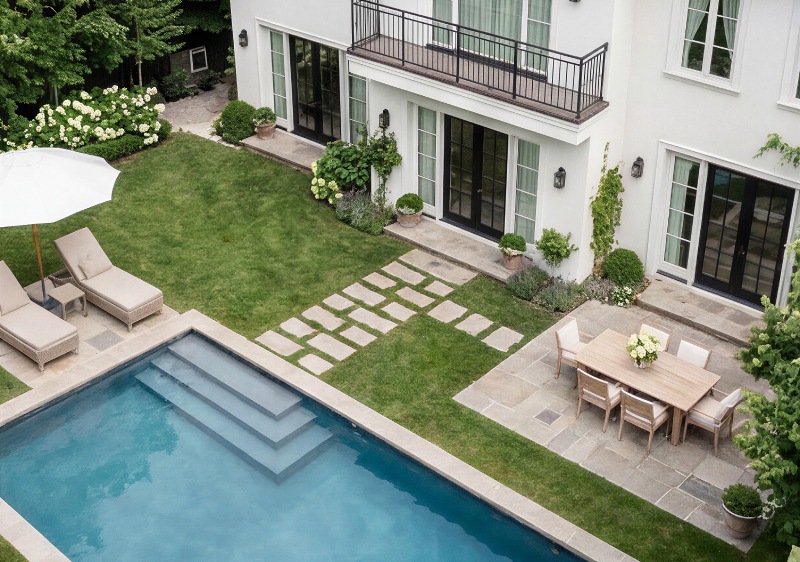
An inground pool, cabana, covered outdoor kitchen, extensive patios, retaining walls, fencing, irrigation, landscape lighting, mature landscaping and a finished driveway can represent a significant additional investment.
If those items are part of the vision for the finished home, they should be considered during the initial site planning – not after the house is nearly complete.
Pool location, grading, equipment access, drainage and future construction access are much easier to solve before the home and landscaping are finished.
There are significant temporary HST programs that anyone building a qualifying new home in 2026 should investigate with their accountant or tax advisor.
The CRA’s Ontario Enhanced New Housing Rebate applies, subject to eligibility requirements, to qualifying homes purchased from a builder between April 1, 2026 and March 31, 2027 and to eligible owner-built homes where construction begins during that period.
Depending on the value of the home and the applicant’s circumstances, qualifying homeowners may be eligible for substantial rebates of the provincial portion of HST.
There are also separate federal and Ontario programs for qualifying first-time buyers of new homes.
The eligibility requirements and interaction between the various rebates are detailed, so these programs should be confirmed directly with the CRA and the homeowner’s accountant or tax professional before being incorporated into the construction budget.
A current Kitchener-Waterloo design-build guide estimates approximately 3-6 months for design and permits and 10-16 months for construction.
That equates to approximately 13-22 months from the initial planning stage to completion in many cases.
That is an industry estimate rather than a guaranteed timeline.
Project complexity, municipal revisions, conservation approvals, weather, trade availability, material lead times and changes made during construction can all affect the schedule.
For a truly custom home, it is generally better to plan conservatively rather than structure a sale or move around the most optimistic possible completion date.
This depends on what you are trying to achieve.
Building gives you control over things that are difficult or impossible to change later: the placement of the house, floor plan, ceiling heights, windows, mechanical systems, garage dimensions and overall architecture.
But when comparing building with buying an existing home, you need to compare the complete investment, not just the builder’s price per square foot.
We would look at three numbers:
The third number is often overlooked.
It is possible to build an incredible home and still spend significantly more than the surrounding market will support.
For that reason, resale value should be considered before the design and budget are finalized – particularly when building a high-end custom home.
Before committing to a lot or teardown in Kitchener-Waterloo, we recommend confirming:
The best time to discover a problem with a building lot is before you own it.
A property can look perfect and still be completely wrong for the home you intend to build.
A reasonable preliminary planning range for a custom detached home is approximately $300-$600+ per square foot. Current local industry guidance places quality custom construction around $300-$375, premium construction around $375-$475 and luxury custom construction around $475-$600+ per square foot. Actual costs depend on the builder, design, site, specifications and what is included in the quote.
At $375-$500 per square foot, a preliminary construction-only budget would be approximately $937,500 to $1.25 million. A more highly customized luxury home could exceed that amount. Land and costs excluded from the builder’s quote would be additional.
At $375-$500 per square foot, approximately $1.125 million to $1.5 million is a reasonable preliminary construction-only planning range. Luxury architecture, finishes and site conditions can push the cost substantially higher.
Generally, no. Land should normally be considered separately from construction cost. Development charges, permits, financing, servicing, landscaping and other project expenses may also fall outside a builder’s quoted price per square foot. Always confirm exactly what is included.
The City’s currently published revised 2026 base rate applicable to a new single-detached home is $25,201, while the current Regional full-service rate is $43,285, producing a published base-rate total of $68,486. Waterloo Council has also approved in principle a 30% reduction in City residential development charges through the new Development Charge Reduction Program, but funding approval was not guaranteed and the City’s published rate continues to show $25,201 as of August 19, 2026. The actual amount payable should therefore be confirmed with the City for the specific project.
Kitchener currently publishes a City charge of $21,215 in the central-neighbourhood area and $31,587 in a full-service suburban area for a new single-detached home. With the current Regional full-service charge of $43,285, the published base-rate totals are approximately $64,500 and $74,872, respectively. Rates are subject to change and should be confirmed for the specific property.
As of August 19, 2026, neither the Waterloo Region District School Board nor the Waterloo Catholic District School Board is collecting Education Development Charges on new development. This should be reconfirmed when permits are obtained because that status can change.
Generally, yes, on a cost-per-square-foot basis. A bungalow requires more foundation and roof area to create the same amount of living space, while a two-storey home can spread those costs over more above-grade floor area.
No. Zoning, setbacks, lot coverage, servicing, easements, grading, environmental constraints and other restrictions can affect what can actually be built. Properties within GRCA-regulated areas may also require conservation-authority approval in addition to municipal permits.
Building a custom home starts with much more than choosing a builder.
The property you buy, what you pay for it, what can actually be built on it and what the finished home will ultimately be worth are all part of the same decision.
At The Deutschmann Team, we help clients look at potential building lots, estate properties and teardowns from a real-estate perspective – including the value of the land today, the surrounding market, potential resale value and whether the overall project makes financial sense.
If you are considering purchasing a building lot, buying a teardown, undertaking a major renovation or deciding between building and purchasing an existing luxury home in Kitchener-Waterloo, reach out before you make the purchase.
A little due diligence at the beginning can prevent a very expensive surprise later.
