
elitere | Sep. 14, 2026
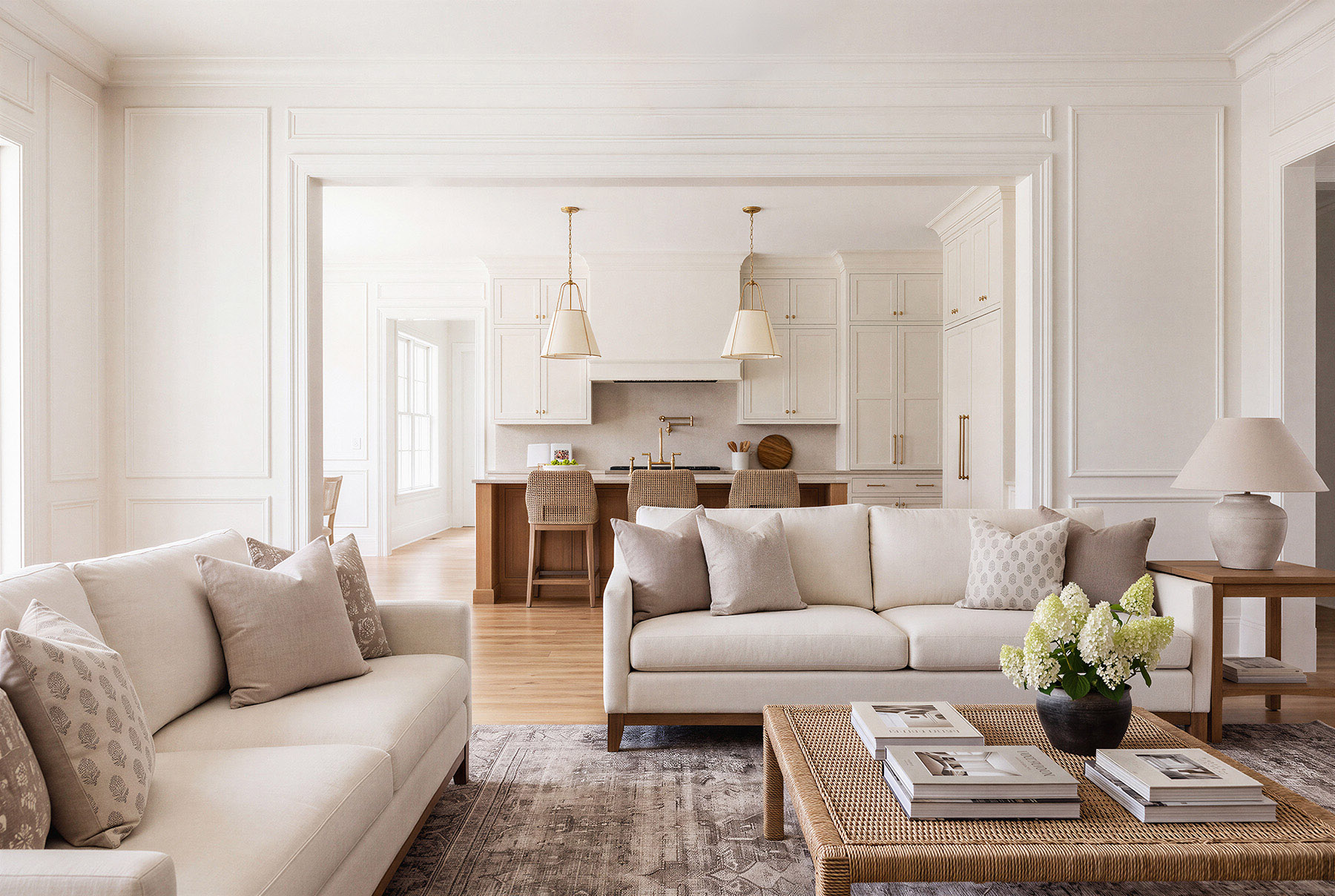
When preparing your home for sale in Waterloo Region, the way a room is arranged can have a significant impact on how buyers perceive its size.
A room does not necessarily need more square footage to feel larger. In many cases, the difference comes down to proportion, furniture placement, sightlines, lighting and how easily the eye can move through the space.
These are the same principles often used when professionally staging a home for market. The goal is not to make a room feel empty. It is to make the space feel balanced, functional and easy for buyers to understand.
Here are some of the staging techniques that can help a room feel more open and spacious.
One of the simplest ways to make a room feel larger is to reduce visual interruptions.
When you enter a room, your eye naturally looks toward the farthest point it can see. If that view is blocked by tall furniture, oversized decor or bulky pieces near the entrance, the room can feel shorter and more enclosed.
Keeping sightlines open allows the eye to travel farther through the space, which creates a stronger sense of depth.
When preparing your home for sale, look closely at what is positioned near doorways, windows and the transitions between rooms. A tall cabinet beside an entryway or a chair positioned directly in front of a window may be perfectly functional day to day, but moving it can make the room feel noticeably more open.
This is especially important in open-concept layouts. When buyers can clearly see from one area into the next, the overall floor plan often feels larger and more connected.
Rug size can completely change how a room is perceived.
A common assumption is that a smaller rug will expose more flooring and make the room feel larger. In practice, an undersized rug can have the opposite effect.
If the rug sits only beneath the coffee table, for example, the eye may read the sofa, chairs and rug as separate elements rather than one cohesive seating area. This creates more visual breaks and can make the room feel fragmented.
A properly sized rug helps connect the furniture and define the room as one complete space.
In most living rooms, the front legs of the main seating pieces should sit on the rug. In larger rooms, all of the furniture may sit fully on the rug.
The goal is not simply to use a large rug. It is to choose one that is proportionate to the furniture and the dimensions of the room.
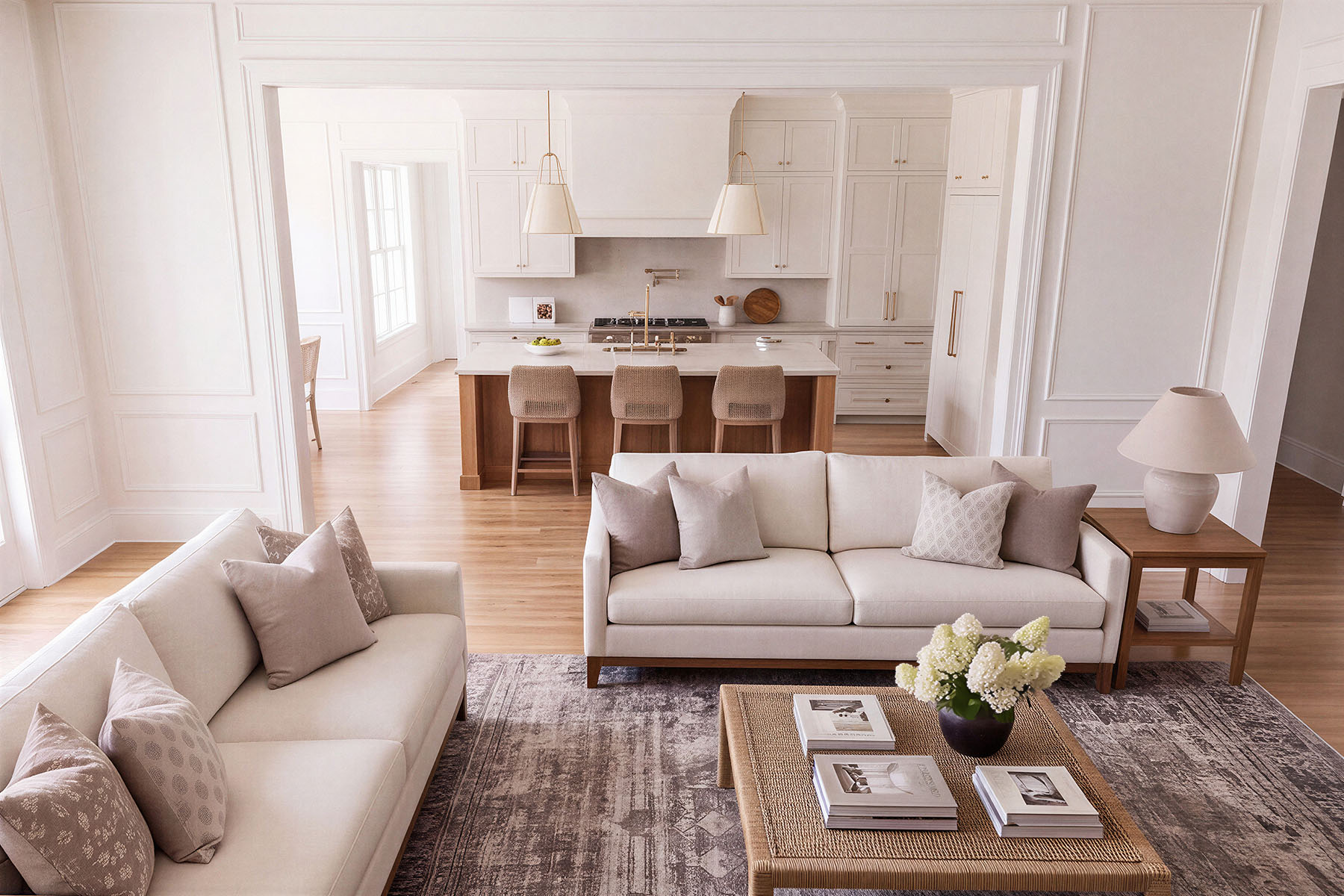
The perceived size of a room is influenced by more than floor space. Ceiling height matters too.
One way to make a room feel more generous is to draw attention upward.
Curtains are a good example. Hanging the curtain rod closer to the ceiling rather than directly above the window frame can make the window appear taller and emphasize the full height of the room.
Floor-length curtains can also create a cleaner vertical line than shorter panels.
Other ways to add visual height include taller artwork, vertically oriented mirrors or subtle architectural details that encourage the eye to move upward.
This technique is particularly effective in smaller rooms, where emphasizing height can help offset limited floor space.
Light has a major impact on how spacious a room feels.
Dark or heavily shaded rooms can feel more enclosed, while natural light helps define the edges of a space and makes it feel more open.
Before listing, it is often worth simplifying window treatments, opening blinds fully and making sure furniture is not blocking windows.
Heavy curtains that frame a window too tightly can make both the window and the room appear smaller. Lighter treatments, or simply opening the curtains wider, can expose more glass and allow more daylight into the space.
Mirrors can also help when used thoughtfully. A mirror positioned where it reflects natural light or an open section of the room can add a sense of depth.
The key is restraint. One well-placed mirror is generally more effective than using several purely for the sake of making a room appear larger.
A spacious room should not only look open. It should feel easy to move through.
Furniture that creates narrow walkways or forces someone to move around several obstacles can make a room feel smaller, even if the room itself is generously sized.
When staging a home, furniture is often repositioned to create more obvious circulation paths between entrances, seating areas and adjoining spaces.
For example, in a living room, buyers should be able to walk from the doorway to the main seating area without navigating around a chair or squeezing between the coffee table and sofa.
This does not mean pushing every piece against the wall.
In many rooms, floating furniture slightly away from the walls can create a more intentional layout and make the space feel better organized. What matters most is maintaining comfortable pathways and avoiding unnecessary obstacles.
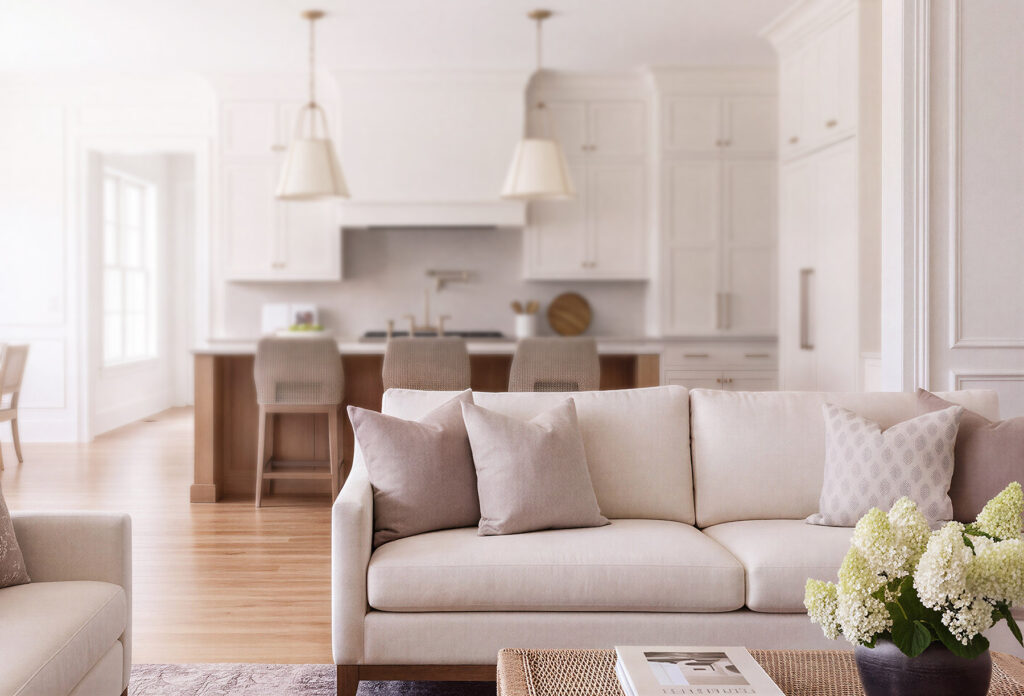
Homes are arranged for everyday living, not for showing.
That means rooms often contain furniture and objects that are useful but do not necessarily help the space present at its best.
Extra chairs, storage cabinets, pet furniture, side tables or desks may all serve a purpose, but they can also make a room feel more crowded.
When preparing to sell, consider whether each piece is helping to communicate the size and function of the room.
Removing even one piece of furniture can sometimes improve a sightline, widen a walkway or make the main seating arrangement feel more balanced.
The goal is not to strip the room down completely.
An empty or nearly empty room can actually make it harder for buyers to judge scale. Furniture gives buyers a reference point for understanding what comfortably fits in the space.
Visual clutter can make a room feel smaller even when there is plenty of physical space.
This is because the eye has more individual objects to process.
When staging, surfaces such as coffee tables, kitchen counters, consoles and dressers are usually simplified rather than completely cleared.
Instead of several small accessories, a few larger and more intentional pieces will often create a cleaner look.
For example, a coffee table may only need a tray, a book and one decorative object rather than multiple candles, bowls, magazines and smaller accessories.
This gives the room more visual breathing space and helps direct attention back to the features of the home itself.
A room can feel larger when the eye moves smoothly through it.
Too many contrasting colours, finishes, patterns and materials can make the space feel divided into smaller visual sections.
A more cohesive palette creates continuity.
That does not mean everything needs to be beige, white or perfectly matched.
Instead, try to repeat similar tones, keep the number of competing finishes limited and use accent colours intentionally.
The same principle applies between adjoining rooms. In open-concept spaces, some consistency in colour and materials can help the entire area feel more connected.
More decor does not necessarily make a room show better.
Too many pillows, throws, accessories, faux plants or decorative objects can distract from the room itself.
The strongest staging usually feels effortless.
A few carefully selected accessories can add warmth and polish while still allowing buyers to notice the things that matter most, such as the windows, flooring, cabinetry, ceiling height and layout.
Staging should support the home rather than compete with it.
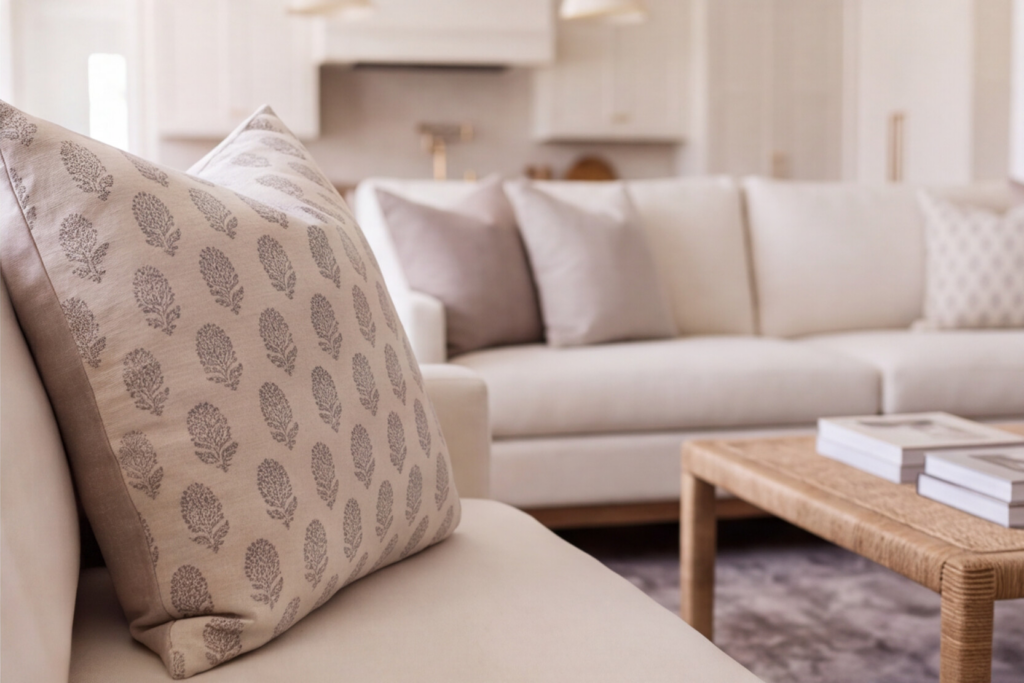
Making a room feel larger is less about creating an illusion and more about presenting the space clearly.
The right furniture scale helps buyers understand what comfortably fits. Open sightlines make the room feel deeper. Proper rug sizing connects the furniture. Natural light adds openness. Clear walkways make the space feel functional.
Often, the most effective staging changes are relatively simple.
Moving one chair, removing an extra table, changing the rug, adjusting the curtains or simplifying a few surfaces can meaningfully change the way a room is perceived.
These details can make a home feel more polished in person, but they are equally important in listing photography, where buyers are often deciding within seconds whether a property deserves a closer look.
If you are preparing to sell in Kitchener-Waterloo or the surrounding Waterloo Region, The Deutschmann Team can help you identify the staging and preparation decisions that will have the greatest impact before your home reaches the market. Contact us today to start.
